

Profs & Pints DC: The Christmas Truce of 1914


Profs and Pints DC presents: “The Christmas Truce of 1914,” on an unauthorized outbreak of peace and goodwill in the midst of a horrific war, with Christopher Hamner, associate professor of history at George Mason University, scholar of soldiers’ experiences in combat, and author of Enduring Battle: American Soldiers in Three Wars, 1776-1945.
It became clear by December 1914 that the First World War, which had been raging on the European continent for five months, stood little chance of ending any time soon. Soldiers had begun to dig into trenches along the Western Front, and the armies of Britain and France were just at the beginning of a brutal stalemate with German forces that would last for nearly four more years.
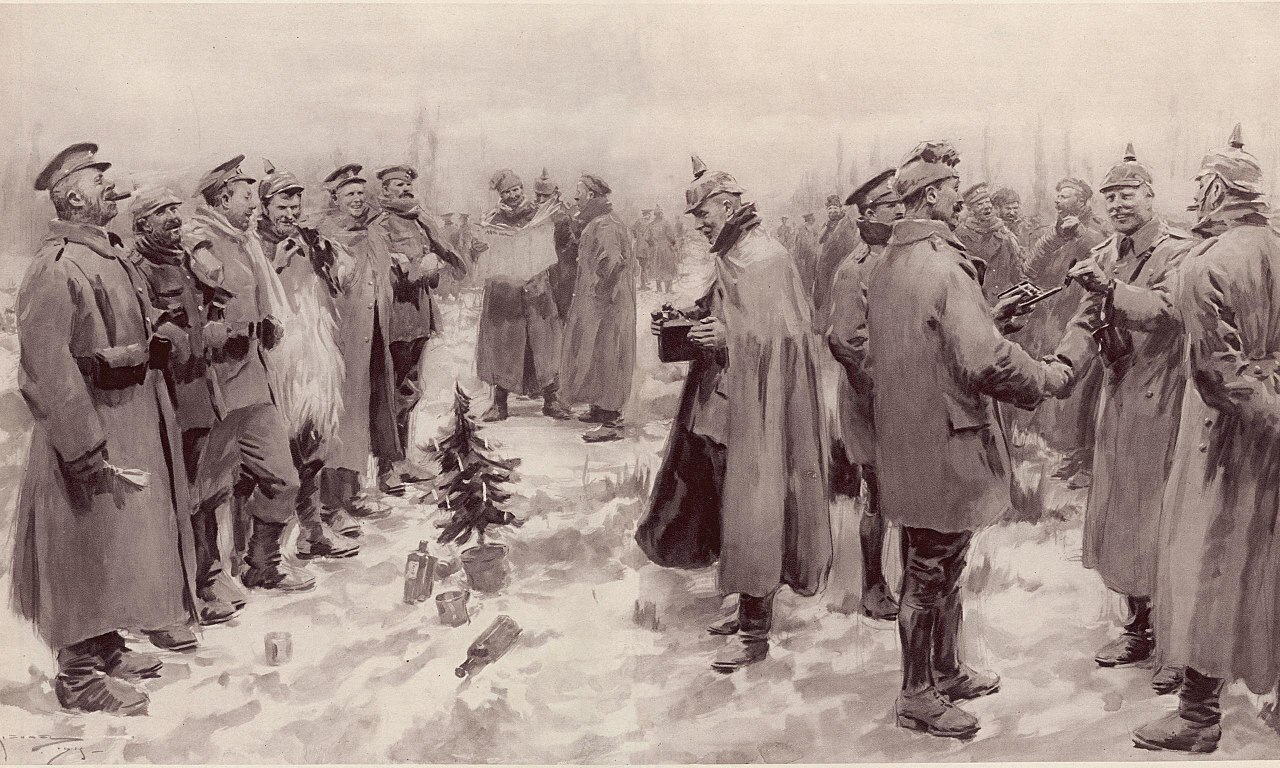
Then, as the Christmas holidays approached, something unanticipated happened. Soldiers who had been firing mercilessly at each other just days before suddenly began crossing no-man’s land to talk, exchange holiday wishes, and sing carols. A strange, spontaneous, informal peace broke out.
Come learn more about this Christmas Truce and the insights its story offers into the psychology of human beings at war with Dr. Christopher Hamner, who previously has given excellent talks on war memorials, World War I poetry, and African American involvement in World War II.
To set up the truce’s story he’ll describe how the long Western Front came to be, with the opposing armies desperately racing each other north in a series of failed outflanking maneuvers until they reached the North Sea.
You’ll learn how the unofficial Christmas truce began as shouted greetings in places where the trench lines were within earshot. It gradually blossomed into something much larger, with soldiers on both sides engaging in burial details, exchanging small gifts and amenities, kicking balls together, cutting one another’s hair, and trading news. The ceasefires were unplanned and unsanctioned, the result of foot soldiers’ tentative efforts to reach out to their counterparts across no man’s land.
Leaders on both sides saw the holiday truce very differently. To them, the idea that their troops might socialize casually with the enemy suggested a lack of aggressive spirit and enthusiasm for fighting. Later attempts to stage holiday truces fizzled out; in 1915, Allied leaders circulated orders before the Christmas season forbidding fraternization in the hopes of averting another such episode of peaceful mingling between sworn enemies.
The 1914 Christmas Truce would be the only such large-scale ceasefire of the war, but it was not, however, the only time that soldiers in the trenches attempted to exert some control over their miserable existence at the front. As the conflict dragged on, observers noted in other places the sprouting of a fragile system of cooperation between enemy forces. Known as the “live and let live system,” it featured delicate, informal arrangements in which soldiers refused to fire at their opponents, or found ways to obey the formal rules of the front lines while mitigating their own exposure to death.
Dr. Hamner will reconstruct some of the episodes of the truce using primary sources from December 1914. He’ll explore what the spontaneous holiday truces reveal about the complex emotions of frontline soldiers. (Advance tickets: $13.50 plus sales tax and processing fees. Door: $17, or $15 with a student ID. Listed time is for doors. The talk starts 30 minutes later.)
Image: An Arthur Cadwgan Michael depiction of the Christmas Truce of 1914 published in The Illustrated London News on January 9, 1915.
Event Links
Tickets: https://go.evvnt.com/3369953-0
